
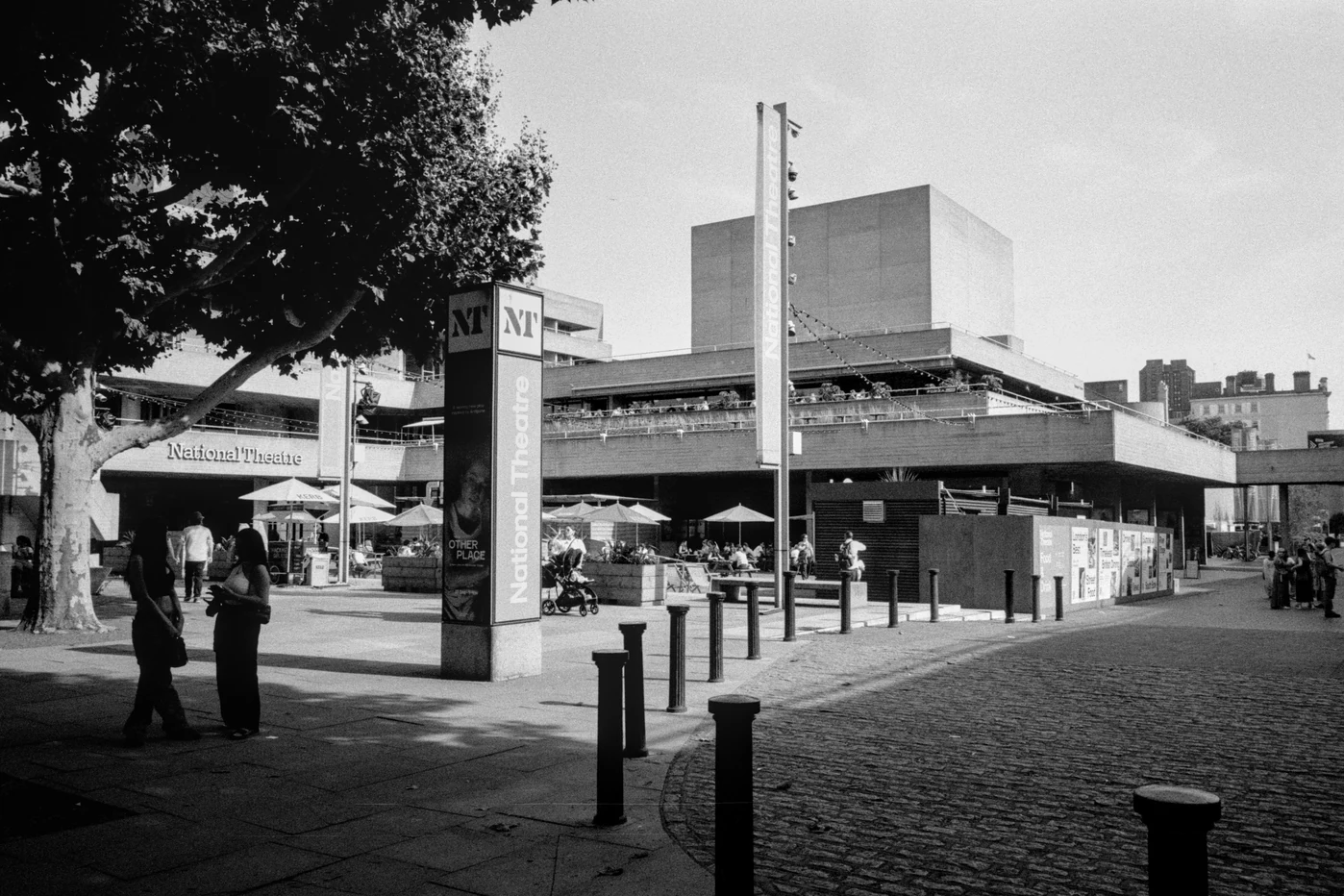
 National Theatre — Olivier

Mowgli’s story, without the ending
A child growing up among animals has to discover what belonging means when the world around him becomes dangerous. Mowgli’s relationships with the jungle’s inhabitants give The Jungle Book its adventure, but they also make it a story about family: who looks after us, whose rules we learn and what we owe the place we call home.
You can follow that starting point without knowing Kipling’s stories or reading a detailed account of the plot. Leave the surprises for the theatre.
The National Theatre’s new version is adapted by Anupama Chandrasekhar from Rudyard Kipling’s stories and directed by Indhu Rubasingham. Its setting is the Sundarbans, with the mangrove world giving the animals and Mowgli a particular environment rather than an anonymous storybook forest. That is an inviting reason to approach the production with curiosity, even if the title has been familiar since childhood.
A new adaptation can ask you to look again at characters you think you already know.
Why this production is worth a trip
The attraction here is the combination of a family adventure and theatre-making on the Olivier stage. Puppetry is by Lume’s Nick Barnes and Finn Caldwell, bringing a craft central to the production’s identity. For an audience, puppetry offers a different pleasure from a screen effect: you share the room with the people making a creature move, and your imagination helps turn their work into a living presence.
That can be absorbing for adults as well as children discovering live theatre.
Hiran Abeysekera plays Mowgli. The announced company also includes performers taking different parts in the creation of animal characters, so it is worth paying attention to the ensemble rather than following only the central child. Watch how a group creates attention, danger or affection through movement, and how a human performance can remain visible within an animal.
Those are suggestions for enjoying the craft, not a description of particular scenes or a promise about an effect you must wait to spot.
We have chosen The Jungle Book as a winter National Theatre trip because it offers a shared adventure in the Olivier and a new adaptation rather than a routine return of a resident show. That is an editorial recommendation for visitors planning a family or mixed-generation outing.
Audiences seeking contemporary adult drama may prefer another production in the building’s season; the right choice is the story and atmosphere your party most wants to experience.
Who might enjoy it?
The premise should appeal to audiences who enjoy animal stories, imaginative worlds and a young central character trying to understand his responsibilities. It can also interest readers who want to see how an adaptation makes choices about a familiar work. You do not have to prepare for it as a school assignment.
A short conversation about Mowgli’s circumstances gives a child enough context to begin, while leaving the relationships and theatrical discoveries to emerge during the performance.
For adults returning to The Jungle Book after many years, approach it as this production’s telling rather than a checklist of remembered moments. A stage play has its own pace and means of showing a world. Families can make that difference part of the pleasure: afterwards, ask which animal seemed most alive, what helped make it convincing and whether Mowgli’s idea of home changed.
The discussion does not need a single correct answer to be a valuable part of the outing.
Dates and the theatre you are booking
The announced London run is 13 November 2026 to 6 February 2027 in the Olivier Theatre at the National Theatre, Upper Ground, South Bank. This is a specific South Bank engagement, and the date range is not a promise of a performance every day. Use the production’s own calendar to choose the exact session before arranging travel, dinner or a hotel.
The winter holidays can produce a different pattern from an ordinary week, and the ticket’s printed time is the one your day must follow.
The National Theatre guide covers the building’s arrival, food, seating and overnight options. Keep the word Olivier with the booking, especially if friends are meeting you: the National contains three different auditoriums with separate productions. A ticket for another room in the same building is another performance. Save the confirmation and make sure everyone in the party knows the title, date, time and auditorium before leaving home.
Age guidance and preparing children
The National recommends The Jungle Book for ages seven and over. That recommendation is a useful starting point, but a familiar title does not tell you how an individual child will respond to danger, animals or the concentration of a live performance. Read the current production guidance before buying, and speak to the theatre if sensory sensitivity, anxiety or another requirement is likely to affect the visit.
Choose the right experience for the child rather than treating an age recommendation as a target to meet.
Explain the practical sequence of the day: the journey, meal, ticket checks, finding the seat and watching alongside other people. For some families it helps to discuss that animals will be made by performers and puppets, allowing a child to be curious about the craft. Others prefer discovering this in the auditorium. Keep the rest of the day manageable either way.
A long museum visit, shopping and an ambitious restaurant meal can leave little energy for the performance that brought you to London.
Choose an assisted performance deliberately
The published schedule includes captioned, BSL-interpreted, audio-described and relaxed performances. These are dated services, so select the required format before choosing the rest of the trip. The September announcement lists a relaxed performance on 16 January 2027 at 1.30pm, a BSL-interpreted performance on 23 January at 1.30pm, and captioned performances on 15 December at 7pm and 20 January at 7pm. Reconfirm the current schedule with the theatre when booking.
For audio description, the published dates are 19 December 2026 at 1.30pm, 8 January 2027 at 7pm and 30 January at 1.30pm, with associated touch tours scheduled ninety minutes before the performance. Arrange the service, suitable seat and touch-tour place directly rather than assuming the ordinary ticket includes every part. The National’s access line is 020 7452 3961.
Its accessibility guide is a useful companion when matching the auditorium route with your party’s requirements.
Seats, price and keeping the group together
Start the seat search with the people coming. Agree whether the priority is an overview of the stage, reducing stairs, a particular access provision or an affordable group of seats together. Use the Olivier’s production-specific seating map and read any restricted-view description before paying. A low price alone does not explain the compromise, and the best seat for one visitor may be unsuitable for another.
Ask the box office to clarify anything that the booking map does not make clear.
Compare the total cost of a few suitable performances rather than looking only at the first date you considered. A different matinee can sometimes make the wider trip easier even when the seat itself is similarly priced. Keep the travel and room conditions alongside the theatre ticket: flexibility in one part of the plan can be useful if another part is fixed.
Do not rely on an unconfirmed last-minute ticket allocation for a visit that needs a specific wheelchair position or family arrangement.
Plan the meal and the journey home
A simple suggested family plan is to arrive on the South Bank with time for a short riverside outing, eat near the theatre and head into the building well before the ticketed start. Keep the afternoon weather-dependent: a brief outdoor walk may be pleasant, while a wet winter day calls for a shorter route and a warm break.
Book the meal against the actual performance time, and give the restaurant the curtain time so that everyone understands the fixed appointment.
Ask the National Theatre for this production’s running time before arranging a fixed return connection; do not borrow the length of a different Jungle Book adaptation. Even with a confirmed duration, allow separately for leaving the auditorium, collecting belongings and reaching a railway platform. A matinee or an overnight stay can be a more comfortable choice than making the performance depend on an uncertain late train.
For visitors arriving at a London mainline terminus, the outward rail journey is only part of the route. Include the cross-city transfer to the South Bank and the final walk into the National. On the return, plan from the correct London departure station, including any assistance or interchange you need.
Keep your hotel luggage arrangements separate from the performance: travelling with a small bag makes it easier to enjoy the building, take your seat and leave at the audience’s pace afterwards.
Frequently asked questions
What time does The Jungle Book finish?
Ask the box office for the duration of your booked The Jungle Book performance before choosing a final train.
How long is The Jungle Book?
Confirm the running time of The Jungle Book with the box office for the selected venue and date.
What age is The Jungle Book suitable for?
Recommended 7+.
Are there cheaper tickets for The Jungle Book?
The Jungle Book participates in National Theatre Friday Rush, with its first release on 30 October 2026 at 13:00 for 13–14 November performances. There is no Friday Rush release on 6 November. Use the official Friday Rush booking link, which appears between 12:45 and 13:00 on release Fridays. The limit is two Friday Rush tickets per production, including tickets bought in previous weeks; availability varies.
The NT 16–25 scheme is a separate eligible-resident offer.
When are the The Jungle Book matinees?
Wed & Sat 13:30; selected Tue & Thu evenings 18:30.
UK dates and venues
| Venue | Dates | Booking |
|---|---|---|
| National Theatre — OlivierLondon | – | Official dates and tickets |